Gamification Definition: Meaning, Elements and Examples
 By Haroon Haneef · Published · 5 min read
On this page
A practical gamification definition is adding elements of game design to an activity that is not itself a game. For a marketer, the distinction is between making shopping game-like and offering a complete game alongside it. Deterding and colleagues’ definition separates those approaches; neither label tells you whether customers will buy.
What makes an activity gamified?
Look for a game-design element applied to the underlying activity. Deterding, Dixon, Khaled and Nacke distinguish selected elements from whole games in their conceptual paper. Ask what the person was doing before the game-like layer arrived.
There is another useful lens. Huotari and Hamari’s service-marketing definition focuses on enabling a gameful experience that supports value for the user. A mechanic alone does not establish that experience.
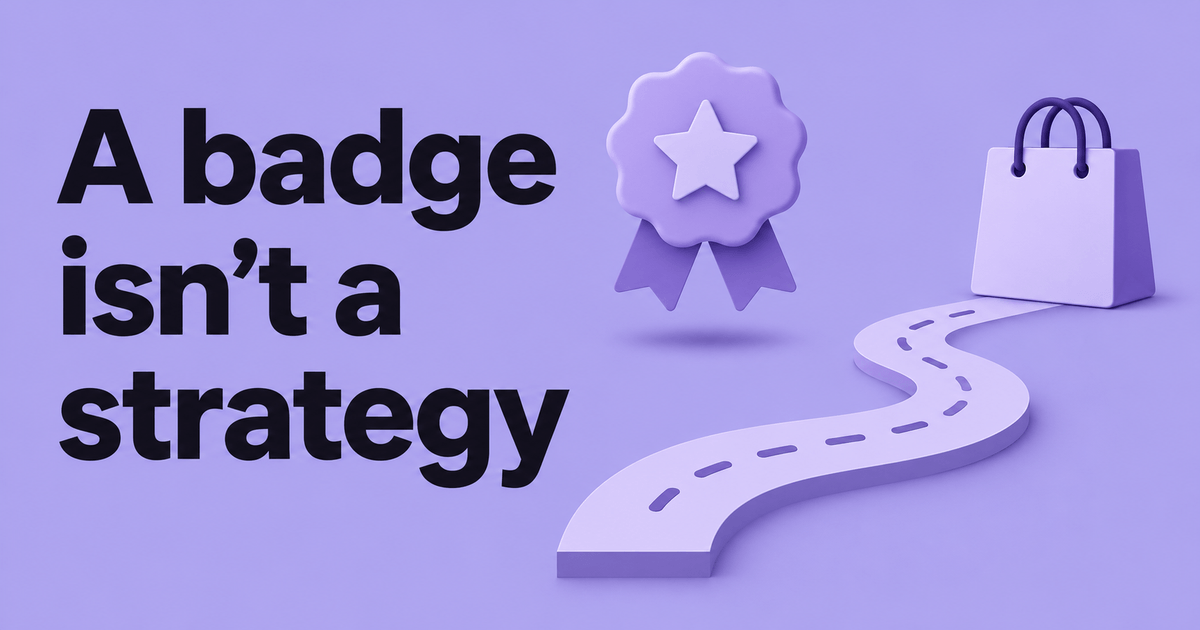
My recommendation is to use both lenses when discussing a campaign: name what the design adds, then ask what the participant gets from it. A badge can be easy to specify in a brief. Whether anyone cares about earning it is a separate question.
Compare hypothetical designs for the same shopping action
Consider a food brand that wants shoppers to explore a gift collection and open a suitable product page. This is an illustrative teaching example, not a real RMH campaign or result. The classifications below are editorial applications of the definitions, not findings from a study.
For this example, fill the blank with “open a gift product that fits their needs.” Keep that destination fixed while changing the interaction.
| Version | Customer task and rule | Feedback | What changes for the shopper? |
|---|---|---|---|
| Plain offer | Browse the gift collection and choose a product; a coupon is displayed beside it | Product details and the offer terms | Shopping stays straightforward; no game challenge is proposed |
| Game-element layer | Explore the gift collection through a discovery mission; visiting each themed group earns progress towards a collection badge | A visible trail marks completed groups and the badge earned | Exploring the existing catalogue becomes a challenge with progress |
| Standalone branded game | Play a separate memory game matching gift-pack pictures, then follow a link to the collection | Matches, completion state and a result screen | The shopper plays a distinct game before returning to shopping |
Under the element-based definition, the discovery mission is the clearest gamification example: it adds game elements to catalogue exploration. The memory version is better described as a complete branded game. The coupon alone supplies no reason to classify the plain offer as gamified.
Under the service-experience lens, ask whether either playful version supports a gameful experience and useful product discovery. A separate game could contribute to the wider shopping service; a badge could contribute very little. The definitions draw attention to different parts of the journey.
For this hypothetical brief, I would keep the plain catalogue as the baseline. Test the mission only if exploration is the problem, and the memory game only if recognising the gift packs serves the campaign. Do not send someone on a treasure hunt when they already know which hamper they want.
Use a recognition checklist, not a badge count
For a campaign discussion, I recommend writing down the following. This is a practical heuristic, not a universal scientific test:
- Underlying activity: What is the customer trying to do without the playful layer?
- Rule or challenge: What must they choose, attempt or complete?
- Feedback: How will they understand the consequence of an action?
- User value: Why would the experience be worth their attention?
Be precise with labels. In the hypothetical example, a progress display could simply show which catalogue sections someone has visited. Calling it a mission requires an actual challenge design. Likewise, I would describe a preference form as a form unless the proposed rules give a reason to call it a game.
Once the interaction is clear, the ecommerce gamification ideas guide can help with mechanic selection. Keep the definition question separate from choosing a reward; use the gamification reward design comparison for that decision.
Where does RMH’s Scratch Card work fit?
RMH’s owner-confirmed internal campaign record documents a GameOn Brands Scratch Card campaign for an anonymous client. The same owner-confirmed record states that no conversion, redemption or sales result has been provided for that campaign.
That establishes a real branded interaction format. The available record does not supply the full rules or user journey, so this guide does not classify that campaign against every academic definition. It is also separate from the hypothetical shopping example above.
GameOn Brands is RMH’s service for creating interactive games customised for a brand. If that is the kind of interaction you need, describe the intended customer action before requesting a format. For the next planning step, read the gamified marketing guide.
Frequently asked questions
What is gamification in business?
It means applying game-design elements to a business activity rather than necessarily building a complete game, following the element-based definition. For a campaign brief, name the customer activity first and explain the layer being added.
What are examples of gamification?
The hypothetical catalogue mission above is an example: shopping remains the activity, with a challenge and progress added. It illustrates the distinction between game elements and whole games; the separate memory game illustrates the other side of that boundary.
What is gamification in marketing?
It applies the idea to a marketing interaction; the service-marketing perspective asks how the design supports gameful experience and user value. My recommendation is to state the benefit for the participant separately from the action the brand wants.
What are gamification techniques?
They are ways to apply game-design elements to an activity, following the element-based definition. In this guide’s hypothetical mission, the proposed techniques are a discovery challenge, visible progress and an earned badge; those are illustrative choices, not a compulsory shopping list.
Bring a customer action to the campaign discussion
Write down what the customer should do, what makes that difficult and why play might help. Then explore GameOn Brands and ask RMH whether a branded game fits that action.