Gamified Marketing Starts With the Next Action
 By Haroon Haneef · Published · 8 min read
On this page
- Start with the action after play
- Three Indian campaigns made three different jobs playable
- Play before registration, and make the rules obvious
- Match the mechanic to what the customer must do
- RMH’s campaigns show what can be stated—and what cannot
- Decide whether a prize helps
- Measure the hand-offs, not just plays
- Skip the game when it adds a detour
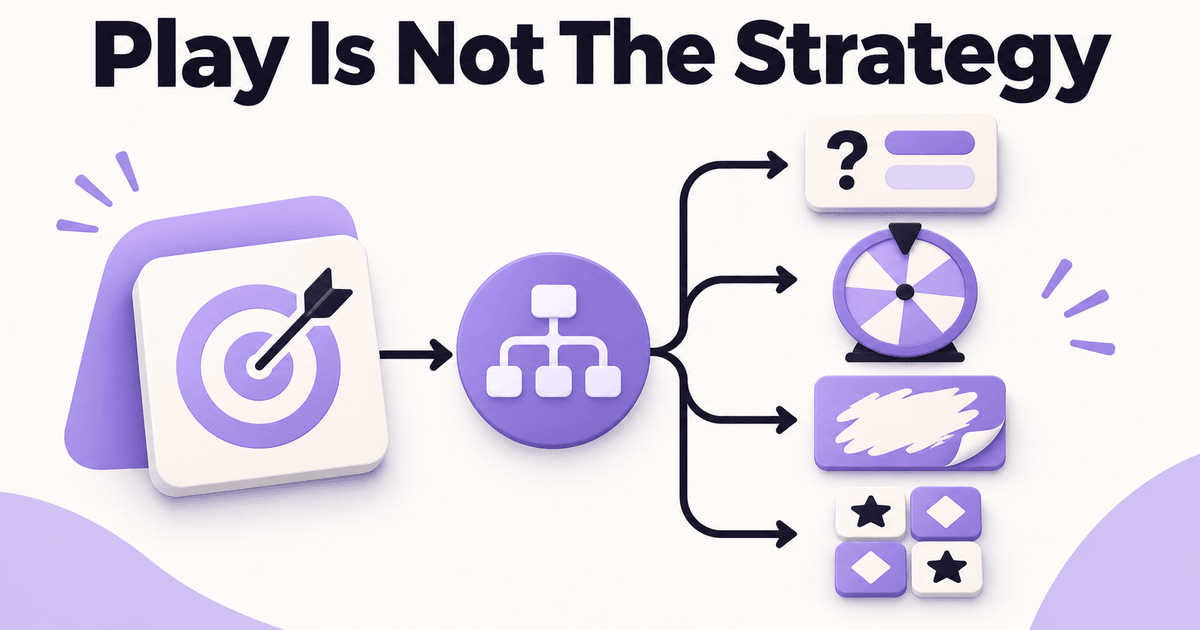
Gamified marketing uses play to move a customer towards a useful action. Start by naming that action, then choose a mechanic that makes it easier, clearer or more rewarding. A game is a poor substitute for a confused offer. If a normal page or form does the job with less effort, keep the confetti in storage.
Start with the action after play
The blank must hold one observable action. “Feel engaged” is not observable. Visiting a relevant product page, identifying the right product, redeeming a coupon or returning for the next question is.
That discipline prevents a common planning mistake: choosing a wheel because it looks lively, then searching for a reason to use it. The mechanic should make the intended action easier to understand or more satisfying to complete. It should not interrupt a simple task with an unrelated challenge.
Define the audience moment next. A shopper considering a purchase, an existing loyalty member and a family encountering a brand quiz are not interchangeable. Each arrives with different motivation and deserves a different amount of effort.
Use a short decision brief:
| Decision | What to write down |
|---|---|
| Behaviour | The single action expected after play |
| Audience moment | What the person is doing and what they already know |
| Reason to play | The value of the interaction, with or without a prize |
| Mechanic | Why this form of play supports the behaviour |
| Next step | The page, offer or message immediately after the result |
| Evidence | The event that would show whether the journey worked |
| Operations | Who owns testing, prizes, support and the closed-campaign state |
Three Indian campaigns made three different jobs playable
Real campaigns help when they sharpen a decision, not when they become a scrapbook. These three chose mechanics for different audience moments: casual media attention, event discovery and product education.
Sprite shortened the route from cricket to purchase
In Sprite’s 2021 campaign with Glance, young Indian cricket fans played on smartphone lock screens and could continue towards an ecommerce purchase; the case reports 66 million impressions in five days, a 3.5-times higher click-through rate and twice the engagement on its campaign page.
The mechanic fitted a fleeting media moment. It did not ask someone to leave the context, study instructions and return later. Copy the short hand-off from attention to action. The reach is not a reason to build any cricket game; the distribution placement did much of the strategic work.
Pulse connected digital play to a physical event
Pulse Candy’s 2022 mobile campaign turned its human-claw event into a timed grab game and ended with an add-to-calendar prompt; mCanvas reports close to five million users, a click-through rate more than fourteen times its industry average and over thirteen seconds of average interaction.

The valuable choice was not the claw animation. It was using the result screen to connect a brief digital interaction to a real event. Copy that continuity when the campaign has a physical destination. Avoid it when the calendar prompt is merely another tap with no clear benefit.
Colgate made product recognition the challenge
At the 2025 India Dental Expo, Colgate used a thirty-second memory match on kiosks, tablets and mobiles to pair product and oral-care visuals; the vendor case reports more than 400 plays across two days, more than 190 leads and a three-times increase in booth engagement time.
Memory matching suited a booth where visitors could recognise product cues quickly. The same mechanic would be flimsy if the cards were decorative logos: remembering where a logo sits is not the same as learning why a product fits. Copy the relationship between what is matched and what the participant should notice.
Across the cases, Sprite reduced the distance from play to purchase, Pulse joined digital play to a physical event, and Colgate used recall inside an education setting. Choose the audience moment and next action before borrowing the surface mechanic.
Play before registration, and make the rules obvious
Campaign examples show what brands ran. Research can test patterns across more than one campaign, although it still does not hand over a universal recipe.
Kristina Risom Jespersen examined aggregated data from 323 consumer advergame campaigns and found that opt-in was higher when people played before registration, while registration effort was associated with lower opt-in. The useful design implication is to earn attention before asking for details. The limit matters: the study used observational data from one platform, so it cannot prove that changing the sequence will cause the same result for every campaign or improve lead quality.
Timmy H. Tseng, Sara H. Hsieh and Crystal T. Lee surveyed 296 branded-app users and linked playability, aesthetics, clear goals, incentives and symbolic benefits with consumer–brand engagement. For a campaign manager, this argues for clear rules and a coherent brand experience rather than decorative points or badges. Because the study was cross-sectional and based on self-reports, it cannot establish that those design elements caused later purchasing or loyalty.
Match the mechanic to what the customer must do
GameOn Brands is a branded-game service from Rabbit Marketing House, a growth marketing agency in India. Its team customises interactive games for a brand, supports website embedding and link distribution, and tracks performance and user data. The listed formats include Spin The Wheel, Scratch card, Quiz and Memory Match, as well as other arcade, puzzle and polling formats.
The four core choices suit different jobs:
- Quiz: use it when answers reveal understanding, guide a recommendation or make the campaign idea more memorable. Each question should affect the experience.
- Spin The Wheel: use it for a clearly bounded set of chance-based outcomes. Confirm that every segment has valid copy, availability and fulfilment.
- Scratch card: use it when the reveal is meaningful in itself, particularly after an action such as entering a valid campaign code.
- Memory Match: use it when recognising and pairing branded visuals reinforces the message. Skip it when the images are only decoration.
GameOn Brands also lists Match the Card, Catch The Goodies, Jigsaw, Find Me, Poll, Jump Up, Fruit Ninja and Flappy Bird. More formats do not improve a weak brief. Choose the simplest interaction that carries the idea without making the participant work harder than the value justifies.
RMH’s campaigns show what can be stated—and what cannot
RMH has run GameOn campaigns for Gramiyum using Match the Card, Amma Samayal using Scratch Card and Shineherbs using Catch the Goodies. Across these campaigns, rewards ranged from coupon codes offering 5% to 50% discounts to occasional free products.
The format choices are documented; evidence on results is more limited. The founder of Gramiyum says on the GameOn page that website conversion rose by 50%. That is a founder testimonial, not verified analytics: the comparison period and measurement method have not been provided. Haroon Haneef worked at Gramiyum from December 2018 to December 2019, and Gramiyum is now a GameOn client.
The founder of Shineherbs describes a high coupon conversion rate achieved cost-efficiently, without a numerical result. RMH has published no conversion, redemption or sales result for Amma Samayal. Those boundaries matter. A campaign page should not grow new analytics simply because the sentence would look tidier with them.
Managers can use the documented pairing of mechanics and reward design. They cannot infer that the same format or coupon range will cause a particular result for another brand.
Decide whether a prize helps
A prize can prompt participation, but it also changes the campaign into an operational commitment. Write down eligibility, every possible outcome, availability, fulfilment ownership, support handling and what happens when the allocation ends. If the game is confusing without a reward, the underlying interaction may not be strong enough.
For an Indian prize campaign, have counsel review the final structure and terms. The Prize Competitions Act defines a covered prize competition around specified puzzle forms in section 2(d), but the correct treatment depends on the design and applicable law. This is general information, not legal advice.
Measure the hand-offs, not just plays
The useful measurement points follow the participant’s journey: arrival, game start, completion, result, intended next action and any fulfilment state. A high start count cannot tell you whether the mechanic helped people understand the offer or continue to the next step.
Choose one primary event tied to the behaviour sentence. Then use the earlier events to locate friction and the later events to judge whether the campaign handed people into a useful brand journey. Keep data capture to what the campaign can explain and use.
Test every route before distribution: instructions, mobile loading, all outcomes, repeat visits, invalid states, the next-step link and the experience after the campaign closes. For a prize campaign, test exhaustion and support cases as carefully as the winning state.
Skip the game when it adds a detour
Use a standard page, form or message when the desired action is already easy and play would add a detour. Also stop when the mechanic has no connection to the campaign idea, the prize operation is unresolved, or the team cannot explain what happens after the result.
Build internally when the team can own interaction design, development, tracking, testing and ongoing fixes. Outsource when the behaviour and campaign rules are settled but specialist production, customisation or embedding would reduce execution risk. Outsourcing the game does not outsource the brand’s decisions about audience, purpose, data, terms or fulfilment.
Rabbit Marketing House says GameOn Brands can support campaigns intended for lead collection, retention or loyalty, but those are possible uses rather than promised results. If the action and operating plan are clear, review the available GameOn Brands formats and contact Rabbit Marketing House with the completed decision brief. The useful conversation begins with what the customer should do next—not which animation looked lively in the meeting.